Spring in Middle Tennessee means warmer days, longer evenings, and a whole lot of outdoor activity — in your yard and under it. As temperatures climb into the 70s, one of nature’s most misunderstood creatures starts making its presence known: snakes. Every spring, our phones light up with calls from homeowners who’ve spotted a snake in their garage, near their foundation, or coiled up in a flower bed. If that sounds familiar, you’re not alone — and you’re in the right place.
Here’s what you need to know about snake season in Nashville and Middle Tennessee this spring.
When Does Snake Season Start in Tennessee?
Snakes are cold-blooded, which means their activity level is directly tied to temperature. In Middle Tennessee, snake activity picks up significantly once daytime temps consistently hit the mid-60s to 70s — which typically happens in April and peaks through May and June. By late spring, snakes are actively hunting, seeking mates, and looking for places to shelter.
That means right now is prime time.
The Most Common Snakes You’ll Encounter in Middle Tennessee
Most snakes in our area are completely harmless and actually beneficial — they help control rodent populations and are an important part of the local ecosystem. That said, there are a few species homeowners should be aware of:
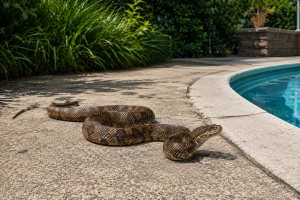
Copperhead (venomous) — The most commonly encountered venomous snake in Middle Tennessee. Copperheads are heavy-bodied with distinctive hourglass-shaped copper and brown banding. They’re often found near wooded areas, rock piles, mulch beds, and leaf litter. They don’t chase people, but they will strike if stepped on or cornered.
Timber Rattlesnake (venomous) — Less common but present in more rural parts of Middle Tennessee. Usually found in heavily wooded, rocky terrain. Larger than a copperhead with a distinctive rattle.
Northern Water Moccasin / Cottonmouth (venomous) — Found near water sources like ponds, creeks, and streams. Thick-bodied, dark colored, and known for holding their ground when threatened.
Black Rat Snake (non-venomous) — One of the most common snakes in Tennessee. Large, black, and an excellent climber — they’re often found in attics and barns looking for rodents. Completely harmless but can give quite a scare.
Eastern Garter Snake (non-venomous) — Small, striped, and very common in yards and gardens. No threat to humans whatsoever.
If you’re ever unsure whether a snake is venomous, the safest rule is simple: don’t approach it, and call a professional.
Why Are Snakes Showing Up Near Your Home?
Snakes don’t wander onto your property randomly — they’re there for a reason. Here are the most common attractants:
Rodents. If you have mice, rats, or chipmunks near your home, snakes will follow. Bird feeders, pet food left outside, and unsecured trash can all draw rodents, which in turn draw snakes.
Mulch and ground cover. Thick mulch beds, tall grass, wood piles, and rock walls are perfect snake habitat — warm, sheltered, and full of insects and small animals to eat.
Water sources. Bird baths, ponds, leaky hoses, and standing water attract frogs and toads, which are a favorite food source for many snake species.
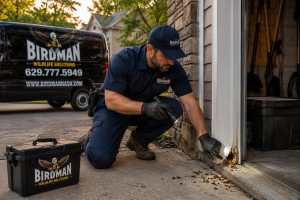
Entry points into structures. Gaps under doors, cracks in foundations, and openings around pipes can allow snakes to enter garages, crawl spaces, and even living areas.
When Should You Call a Professional?
Most of the time, a non-venomous snake spotted in your yard isn’t an emergency — it will often move on its own within a day or two. However, you should call a wildlife removal professional if:
- You’ve spotted a snake you believe to be venomous (copperhead, rattlesnake, or cottonmouth)
- A snake has entered your home, garage, or crawl space
- You’re finding snakes repeatedly — this may indicate a larger population or a nearby den
- You have young children or pets and want the situation resolved quickly
- You’re simply not comfortable handling it on your own — and that’s completely valid
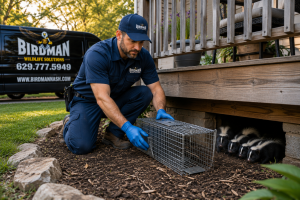
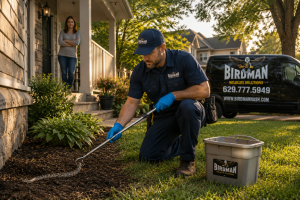
Never attempt to handle or kill a venomous snake yourself. The majority of snake bites happen when people try to kill or move a snake on their own. A professional can remove it safely and identify what drew it to your property in the first place.
How to Make Your Property Less Attractive to Snakes This Spring
A few simple steps can significantly reduce the likelihood of a snake encounter around your home:
- Keep grass mowed short, especially along fences and foundations
- Remove wood piles, debris, and leaf piles from near the house
- Seal gaps under doors and around utility penetrations in your foundation
- Store bird seed and pet food in sealed containers
- Address any existing rodent problems — this is often the root cause
Spotted a Snake? Don’t Panic — Call Birdman.
Whether it’s a harmless garter snake in the garden or a copperhead too close for comfort, our team handles snake situations across Nashville and all of Middle Tennessee safely and professionally. We’ll identify the species, remove the snake humanely, and help you understand what attracted it so you can prevent it from happening again.
📞 Call or Text: (629) 777-5949
Same-day service available. Locally owned and licensed. Serving Nashville, Brentwood, Franklin, Murfreesboro, Hendersonville, Mount Juliet, Smyrna, and surrounding Middle Tennessee communities.