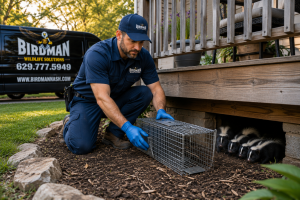

Most people think of rodents as a fall and winter problem — and it’s true that mice and rats seek warmth when temperatures drop. But summer brings its own rodent surge in Nashville, and it catches homeowners off guard every year. June and July are peak breeding months for both mice and rats in Middle Tennessee, which means populations can explode rapidly if the conditions are right. Here’s what’s happening outside your home right now and what to do about it.
Why Rodents Are a Summer Problem Too
The misconception that rodents are only a cold-weather issue comes from the fact that fall infestations are more obvious — rodents move inside seeking warmth and suddenly become visible. In summer, they’re just as active, but they’re often living and breeding outside or in less-trafficked spaces like attics, crawlspaces, and wall voids where you don’t notice them right away.
Summer rodent activity in Nashville is driven by:
- Peak breeding cycles. Mice can produce a new litter every three weeks, with five to ten pups per litter. A small population in June can become a serious infestation by August.
- Abundant outdoor food sources. Summer means gardens, outdoor grills, pet food left outside, bird feeders, and compost — all of which attract and sustain rodent populations close to your home.
- Construction and landscaping activity. Summer renovation projects, new construction nearby, and heavy landscaping disturb rodent habitats and push them toward residential structures.
- Lush vegetation provides cover. Tall grass, overgrown shrubs, and dense garden areas create ideal travel corridors and hiding spots right up against your home.
The Two Rodents Most Common in Nashville This Summer
Norway rats (brown rats) are the larger of the two, typically 7–9 inches in body length, with heavy builds and blunt snouts. They burrow in the ground, prefer lower levels of structures, and are most active at dusk and dawn. Signs include burrow holes along foundations, grease marks along baseboards, and large droppings.
House mice are much smaller — 2–4 inches — with large ears and pointed snouts. They’re excellent climbers and can squeeze through a gap the size of a dime. They nest in wall voids, attic insulation, and cluttered storage areas. Signs include small dark droppings, gnaw marks on food packaging, and shredded nesting material.
Both species can cause significant structural damage through gnawing and can contaminate food and surfaces with droppings and urine. Rodents are also a primary food source for snakes — so an untreated rodent problem often leads to snake encounters as well.
Signs You Have a Summer Rodent Problem
- Droppings near food sources, along walls, or in cabinets and drawers
- Gnaw marks on wood, plastic, wiring, or food packaging
- Scratching or rustling sounds in walls, ceilings, or attics — especially at night
- Burrow holes in soft soil along your foundation, under decks, or in garden areas
- Grease marks along baseboards or entry points from repeated travel routes
- Pet behavior changes — dogs and cats often detect rodents before humans do
- Damaged garden produce — partially eaten vegetables or gnawed fruit are a clear sign
If you’re seeing any combination of these signs, the population is likely larger than it appears. Rodents are shy and avoid exposure, so visible activity or obvious damage almost always indicates a well-established presence.
How Rodents Get Into Nashville Homes in Summer
Rodents don’t need much. A mouse can enter through a gap as small as a quarter inch. Common entry points include:
- Gaps around utility lines and pipes entering the foundation or exterior walls
- Damaged weatherstripping under garage doors and entry doors
- Roof vents and soffit gaps — particularly relevant for attic entry
- Foundation cracks and unsealed crawlspace vents
- Gaps where AC lines, cable, and plumbing enter the home
- Open garage doors left up during summer evenings
Rodents living in your yard don’t need a reason to come inside — they’re constantly exploring, and once they find a gap, they use it regularly.
Why Summer Is the Right Time to Act
Waiting until fall to address a rodent problem is one of the most common mistakes Nashville homeowners make. Here’s the math: a pair of mice in June can theoretically produce over 200 descendants by the end of the summer. Treating a moderate problem in late June is significantly simpler and less expensive than treating a full infestation in September.
Summer also provides better visibility for exterior inspection and exclusion work — our technicians can fully assess your property, identify entry points, and seal gaps while conditions are favorable.
How Birdman Handles Rodent Problems
Birdman takes a comprehensive, integrated approach to rodent control:
- Full property inspection — Interior and exterior assessment to identify active signs, entry points, nesting areas, and conducive conditions.
- Exclusion work — Sealing identified entry points using professional-grade materials that rodents can’t gnaw through.
- Targeted removal — Strategic trap and bait placement based on identified travel patterns and activity areas.
- Sanitation recommendations — Guidance on eliminating food sources and harborage conditions that are sustaining the population.
- Follow-up and monitoring — We don’t just treat and leave. We follow up to confirm the problem is fully resolved.
Get Ahead of It This Summer
If you’ve seen signs of rodent activity on your Nashville property — or if you just want a professional inspection to make sure your home is protected before peak season hits — Birdman is ready to help.